CrewAI Hands-On Learning Path – 2025
Master autonomous agent workflows by building real-world AI applications with CrewAI.

Overview
CrewAI is an open-source Python framework for building autonomous AI agents that collaborate to execute complex workflows such as research, content generation, and task automation. With over 30,000 GitHub stars and increasing enterprise adoption, CrewAI is quickly becoming a go-to platform for multi-agent systems.
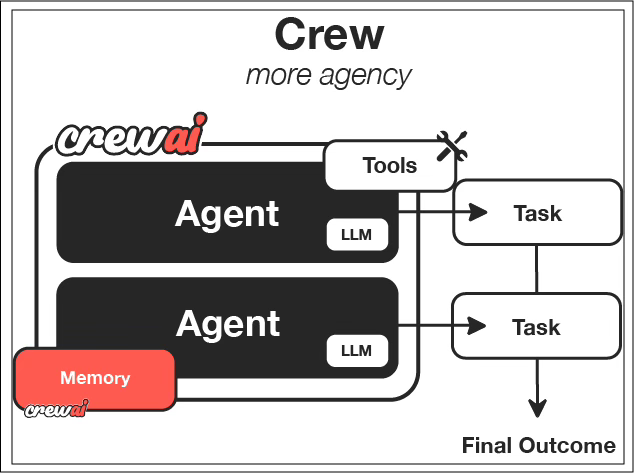
This learning path provides a structured and hands-on approach to mastering CrewAI through official documentation, community-driven examples, and a DeepLearning.ai course. Whether you’re a beginner or seeking to deepen your expertise, the focus is on learning by building real-world use cases.
Prerequisites
To get the most out of this learning journey, the following are recommended:
Python Proficiency: Comfortable with Python programming and libraries.
Basic Understanding of AI Agents: Familiar with the concept of autonomous agents that can plan, reason, and act—distinct from traditional LLMs.
Learning Path
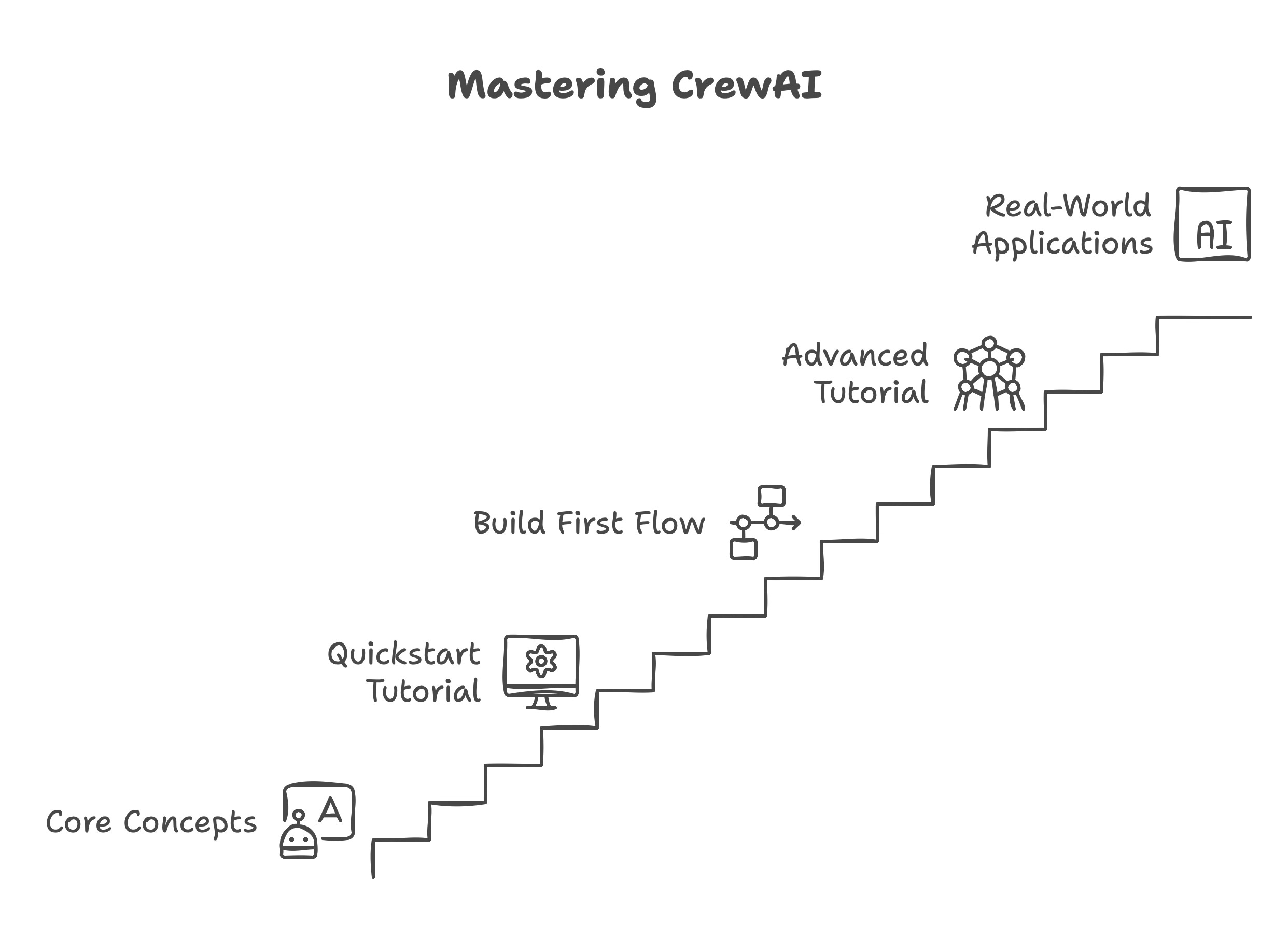
1. Understand the Core Concepts
Begin with a high-level overview of CrewAI’s building blocks. Spend a few minutes understanding these components, then move to the Quickstart tutorial. Dive deeper into the documentation as you progress hands-on.
Focus on these key components:
Agents: Role-driven entities with specific goals and tools.
Tasks: Discrete units of work executed by agents.
Crews: A team of agents working together toward a shared goal.
Use this as a reference throughout your hands-on learning—it’s comprehensive and useful for deeper insights.
2. Complete the Quickstart Tutorial
Follow the Quickstart Guide for a hands-on introduction in under 10 minutes.
Install CrewAI
Define your first set of agents and tasks
Build and run your first simple crew
3. Build Your First Flow
💡 You can start here or jump directly to the Advanced Tutorial (Step 4) for a structured course that includes this as part of its hands-on modules.
Explore CrewAI’s Flow system for orchestrating structured, multi-step agent workflows:
Before You Begin:
Install CrewAI using the installation guide.
Set up your OpenAI API key (alternatively, try groq cloud, that offers limited free open-source LLM API usage).
Ensure you’re comfortable writing and modifying basic Python code.
Learning Outcomes:
By completing this guide, you’ll:
Understand the purpose and benefits of Flows in coordinating agent collaboration.
Build a structured, multi-step workflow using CrewAI’s Flow API for real-world tasks like research automation.
Learn how to configure and sequence agents and tasks for smooth execution.
Gain practical skills to design reusable, scalable pipelines that form the foundation for advanced agentic applications.
4. Dive Into the Advanced Tutorial
Deepen your skills with a course by DeepLearning.ai, taught by CrewAI’s founder. This structured program covers real-world use cases such as project planning, lead scoring, and orchestrated AI workflows.
🔗 Practical Multi-AI Agents and Advanced Use Cases with CrewAI
5. Build Real-World Applications
Apply your skills using sample projects from the CrewAI Examples Repository. Ideal starting points:
Stock Recommender
Analyze market data and generate investment insights. Refer 🔗 Example
Write a Book Flow
Use a crew of agents to research, draft, and compile content into book format—ideal for understanding how complex multi-step writing workflows can be automated. Refer 🔗 Example
Smart Recruitment
Automate job postings and candidate screening. Refer 🔗 Example
Additional Resources:
📄 Training Guide: Learn to improve agent behavior with human feedback.
🔗 CrewAI GitHub: Stay updated with the latest features, community discussions, and issue tracking.
Conclusion
CrewAI opens the door to a new generation of collaborative autonomous agents. This learning path ensures you don’t just understand the theory, but gain practical, portfolio-ready experience with one of the most exciting platforms in AI development today.
Interesting read !
How do CrewAI agents differ from traditional prompt-chaining with LLMs? Also, can agents in a crew learn from each other's past actions or mistakes over time?